Mallorcan Turrón: The Four Kinds We Make at Christmas
· 8 min read

Key takeaway
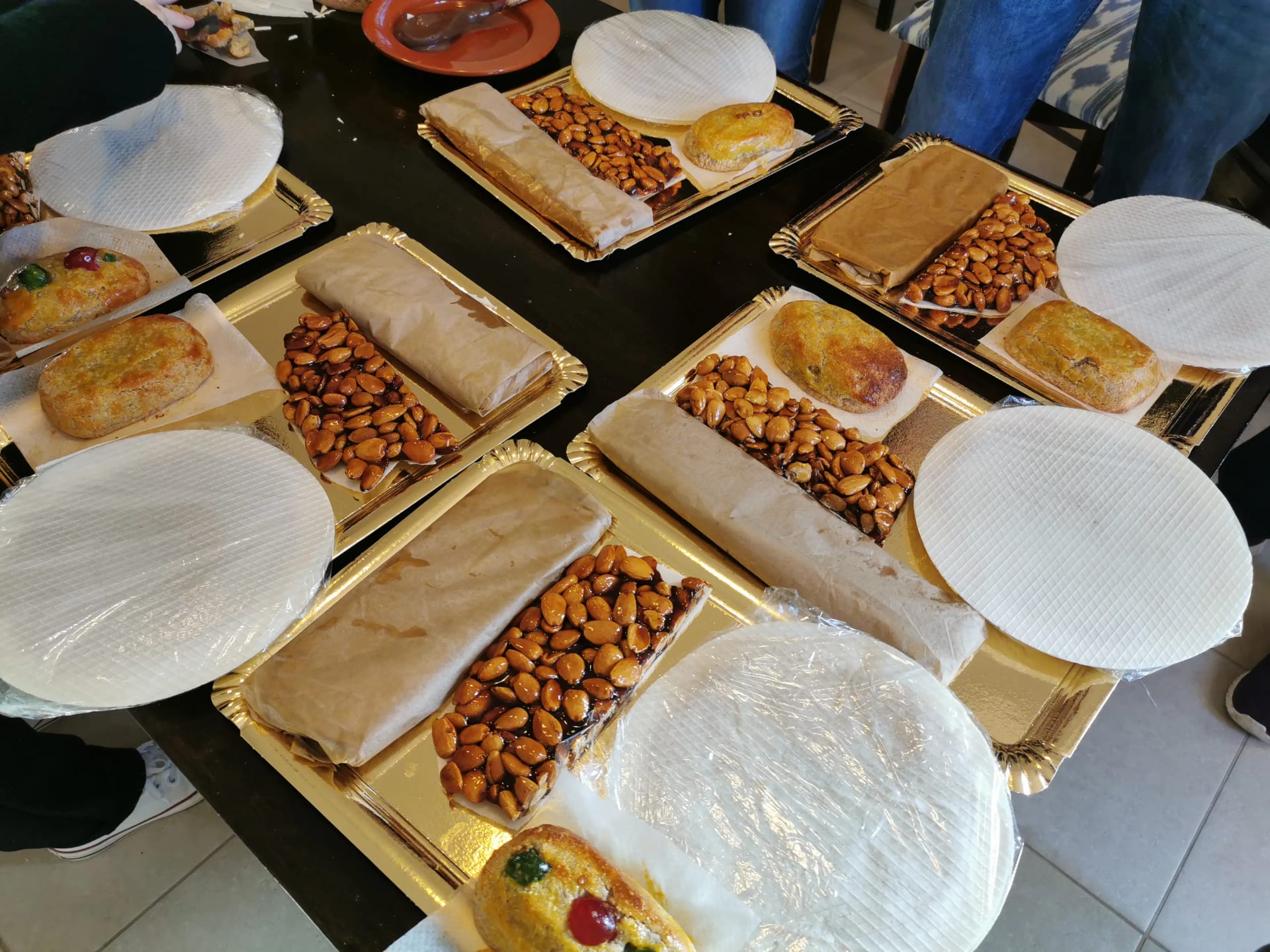
Mallorcan turrón (torró in Catalan, almond nougat in English) is a family of four Christmas sweets, all made from almonds: soft torró fluix, hard tambor d'ametlla, shaped massapà and coca de torró, pressed between two wafers.
The half lemon
The sugar goes into the pan on its own, and nobody stirs it. You only swirl the pan, and slowly it melts until it has the colour of honey. Then the almonds go in all at once, and from that moment you are counting seconds. The mass goes onto oiled marble and you press it flat with the cut side of half a lemon, about half a finger thick. Wait too long and it sets before you can shape it.
That is tambor d'ametlla, one of the four almond sweets Mallorcan families make for Christmas. The other three are torró fluix, massapà and coca de torró. Turrón is the Spanish word, torró the Catalan one we use on the island, and in English it becomes almond nougat. Here the word means a family, not one bar, and every member of the family starts with the same thing: the almond.
An island that ran on almonds
Almonds have been on Mallorca for a very long time. Under Arab rule they became a real crop, and the big change came at the end of the 19th century: phylloxera reached the island in 1891, killed the vineyards, and almond trees took their place across the plain. For generations, the countryside in January and February was white with blossom.
The Christmas sweets followed the harvest. The researcher Tomàs Vibot, writing for Pa d'Aquí, describes almonds picked at the end of summer and cracked in September, then turrón made at home in the days before Christmas Eve. By tradition you could only eat it after the Misa del Gallo, the midnight Mass, so it came to the table on the 25th. The first turrones documented on the island were all almond ones: tambor, coca de torró, toasted-almond turrón and marzipan.
The almond itself is part of the recipe. Since 2014, Almendra de Mallorca / Ametlla de Mallorca is an EU Protected Geographical Indication, and its rules ask for at least 55% fat. Most of that fat melts below 15°C, so it turns liquid as you chew. That is why Mallorcan turrón is creamier and smells stronger of almond than many bars from the mainland.
The four kinds of Mallorcan turrón
Torró fluix: soft almond turrón
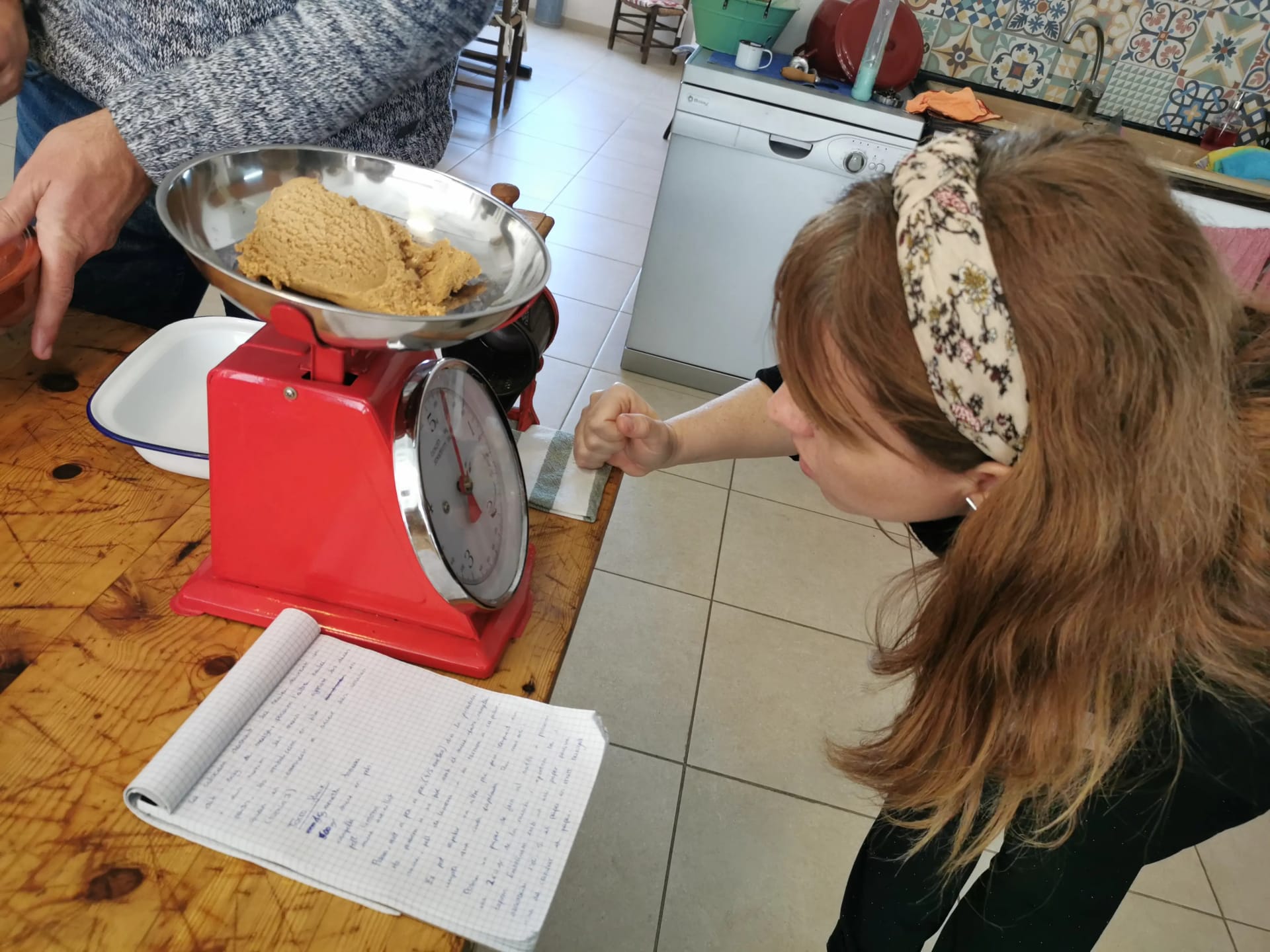
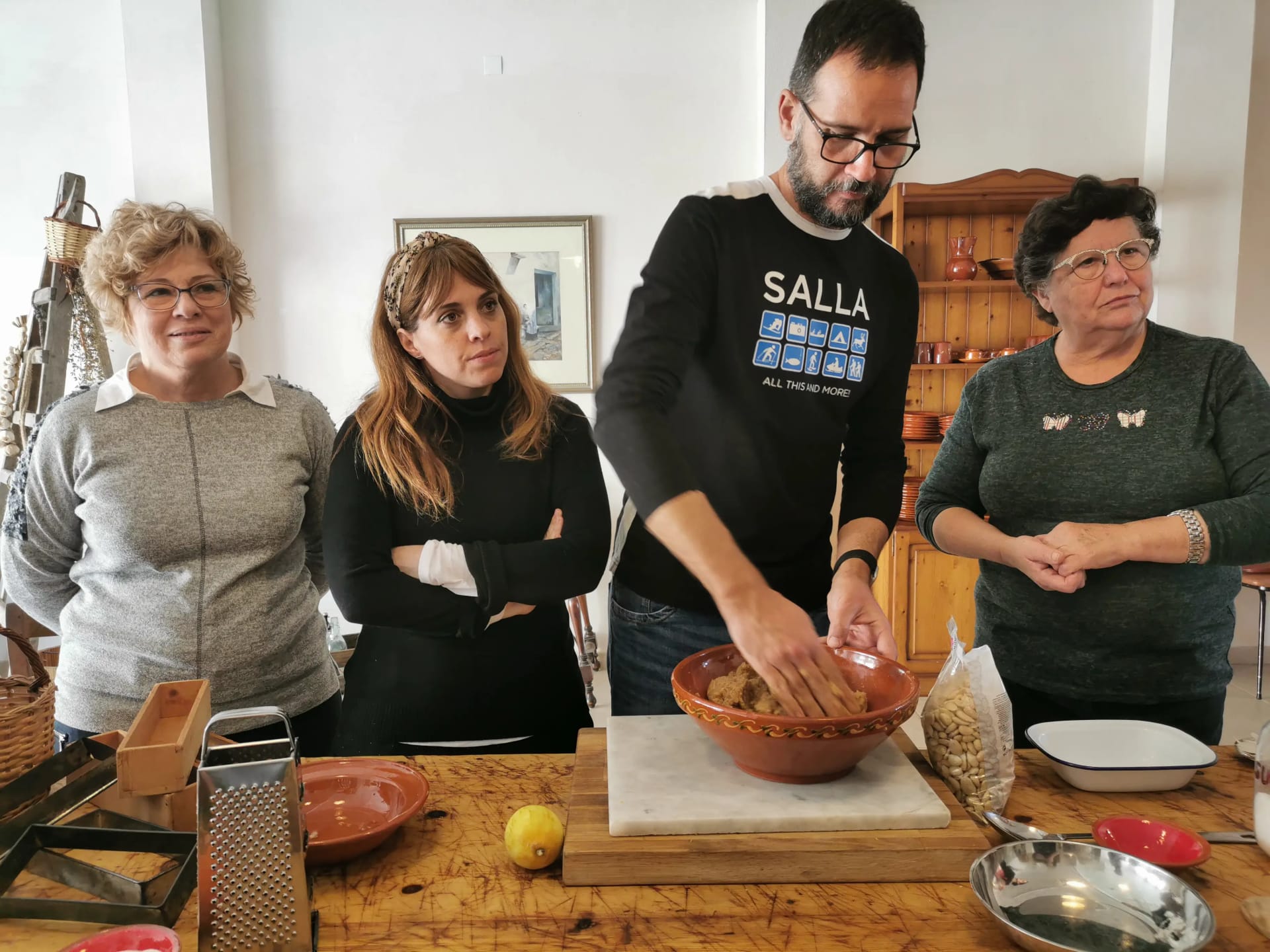
Torró fluix ("soft turrón") is toasted almond ground with sugar until the almonds release their oil and the mixture becomes a dense paste. It is never cooked beyond toasting the almonds.
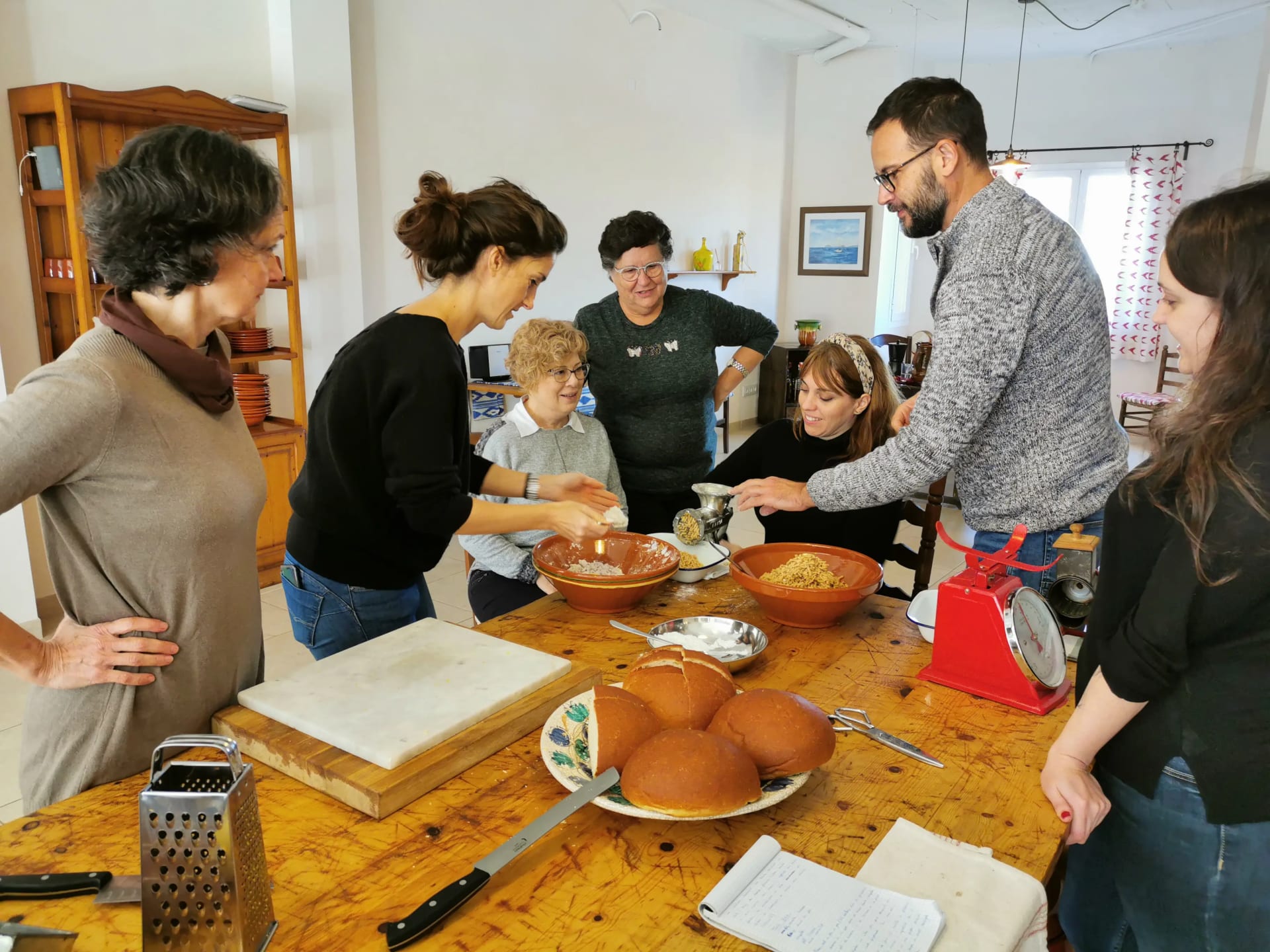
A typical home recipe uses about 500 g of almonds to 350 g of icing sugar. You blanch, peel and toast the almonds, not too dark, grind them, then grind again with the sugar. At first it looks like sandy dust and refuses to come together. Keep going and suddenly it becomes a paste. Go too far and it turns oily. The paste is pressed into small wooden boxes lined with paper, which soaks up the oil, and it rests for about two weeks before you cut it.
The name confuses people. In Catalan, "torró fluix" is also used for turrón de Jijona, the soft turrón from Alicante. They are not the same: Jijona turrón has honey and egg white and is cooked twice. Mallorcan torró fluix is only almond and sugar.
Tambor d'ametlla: Mallorcan almond brittle
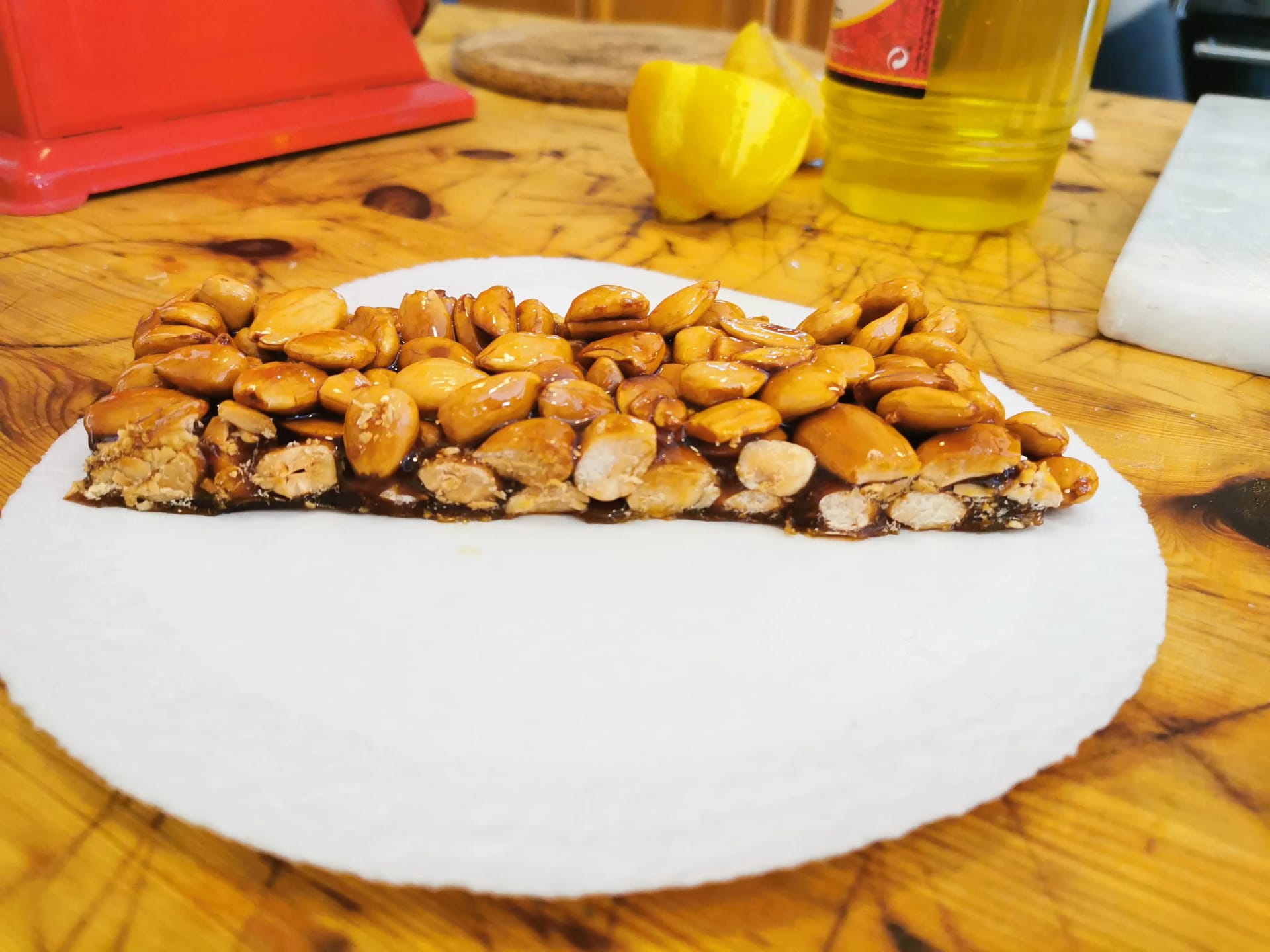
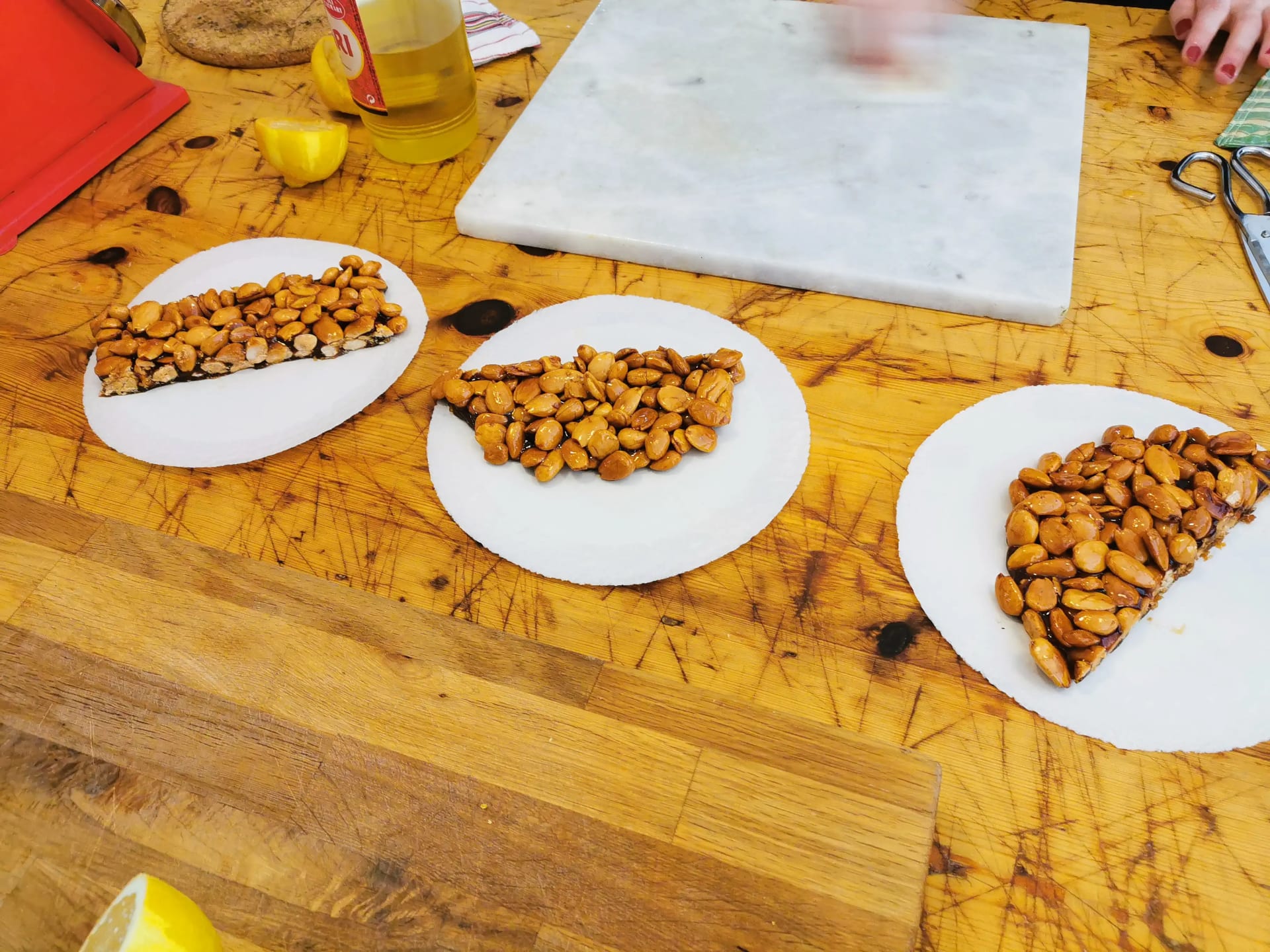
Tambor d'ametlla ("almond drum") is a thin, hard turrón of whole almonds held in caramelised sugar, a little darker than honey. It is the only one of the four that is properly cooked, and the fastest to make.
Families do it differently. Some caramelise the sugar dry and add toasted almonds; others cook raw almonds with the sugar and a little water in a clay greixonera, stirring until it browns. Everyone agrees on the half lemon. It is not there for the juice: it is the tool you use to press the hot mass flat, and it leaves a light citrus note. Once cold, you break the slab into pieces and keep them in a glass jar, never plastic, where they last for weeks. In Menorca a similar sweet is called torró cremat.
Massapà: Mallorcan marzipan
Massapà is Mallorcan marzipan: raw almonds ground very fine and mixed with sugar, usually bound with egg white, then shaped by hand or in moulds, brushed with egg and browned for a few minutes in a hot oven. Every house has its touch: a little orange juice or zest, cooked sweet potato to bind it, or a layer of quince or candied fruit in the middle.
The word is old. Marzipan already appears in Tirant lo Blanc, the 15th-century Valencian novel, and it has been on Mallorcan tables for centuries.
Coca de torró: turrón between two wafers
Coca de torró is the most Mallorcan of the four: almond and sugar paste sealed between two round wafers (neules). The paste is raw almond ground fine, with sugar, grated lemon zest and cinnamon, and orange juice added a spoon at a time until it holds together.
You spread it over one wafer, often pressing it with a damp cloth so the wafer does not crack, wet the edges and seal the second wafer on top. A few days of rest make it better. Because the almond is raw, it does not keep as long as the toasted kinds. Bakers across the island make their own versions, with carob, figs or orange from Sóller, but the classic is just almond, lemon and cinnamon.
The trees are going
All four sweets depend on a crop that is disappearing. In October 2026 the Balearic government's agriculture service reported 8,228 hectares of almond trees left on the islands, against 85,000 in the 1980s, and a 2025 harvest 81% smaller than in 2016. Low prices made farmers abandon old orchards, and the bacterium Xylella fastidiosa, first found in Spain in Mallorca in 2016, did the rest. More than half of our local varieties are very sensitive to it.
At the same time, much of the almond in industrial Spanish turrón comes from abroad, a large share from California. Mallorcan almond costs more, and there is less of it. But sales of certified Ametlla de Mallorca keep growing, and that is the hopeful part. If you buy turrón on the island, look for the PGI label, buy from bakeries and convents that say where their almond comes from, or make it yourself.
Back to the marble
By now the tambor has cooled. You lift the slab from the marble, it breaks with a clean, glassy snap, and the pieces go into a jar to wait for Christmas.
At Soqueta I make turrón the way Tía Catalina did, and once a year I open the kitchen to make it together. The Christmas Turrón Workshop is on Sunday 13 December 2026, from 10:00 to 13:00, at Soqueta in Sant Jordi, Palma. In three hours we make all four by hand: torró fluix, tambor d'ametlla, massapà and coca de torró, with hot chocolate, cocas, ensaïmadas, coffee and mistela on the table. Only ten places, €65 per person.
Frequently asked questions
Torró fluix (soft turrón of toasted almond and sugar), tambor d'ametlla (hard brittle of whole almonds in caramel), massapà (Mallorcan marzipan) and coca de torró (almond paste between two round wafers). All four are made from almonds.
In English, turrón is usually called almond nougat. Mallorcan turrón has no honey and no egg-white foam like French nougat: most kinds are just almond and sugar, with lemon, cinnamon or orange.
Both are soft, but Jijona turrón has honey and egg white and is cooked twice. Mallorcan torró fluix is toasted almond ground with sugar and is not cooked.
Half a lemon is used as a tool to press the hot caramel and almonds flat on the marble. It is not there for the juice, but it leaves a light citrus note.
At Christmas. Traditionally families made it at home before Christmas Eve and ate it after the midnight Mass, on the 25th. Today you find it in bakeries and convents from late November.
At Soqueta's Christmas Turrón Workshop in Palma, once a year. In 2026 it is on Sunday 13 December, 10:00 to 13:00, for up to 10 guests at €65 per person, and we make all four kinds by hand.