Tap de Cortí. Mallorca's Vanishing Paprika and the People Fighting to Save It
· 16 min read

Key takeaway
Tap de Cortí is the native Mallorcan paprika that gives sobrasada its character. It nearly disappeared in the 1980s when cheap imports undercut local farmers. Today a handful of families in Sant Jordi and surrounding villages are growing it back. The flavour they are preserving is unlike any other paprika in the world.
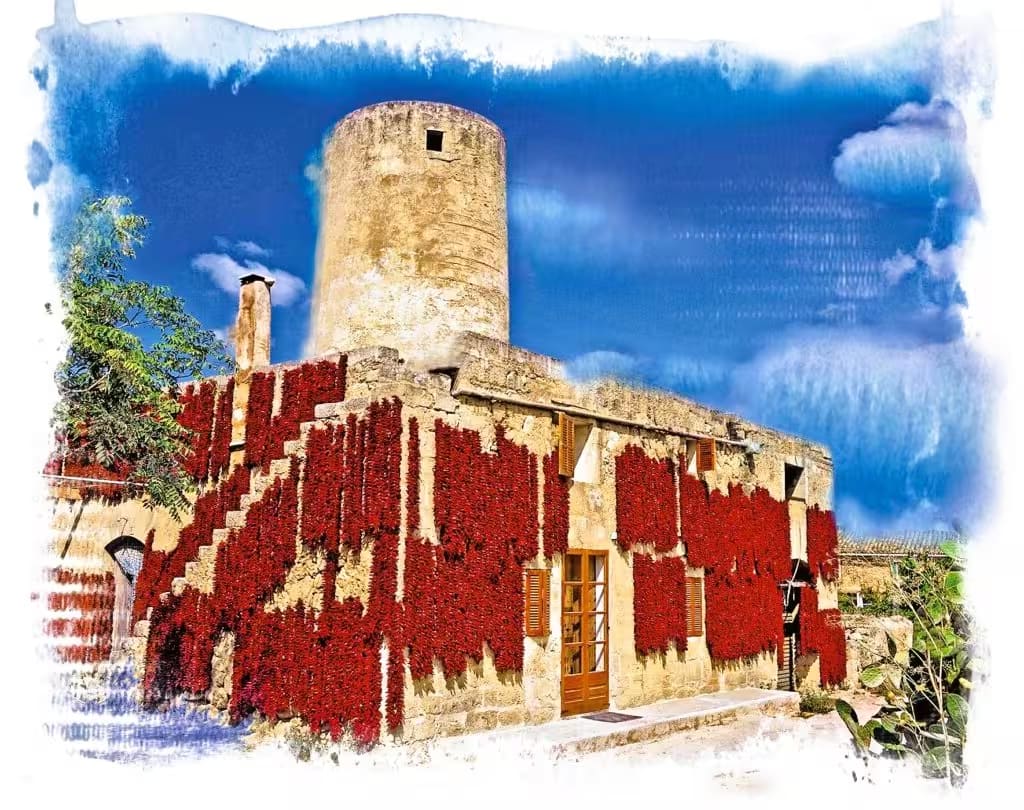
Walk through Sant Jordi, Santa Maria del Camí, or Pòrtol between August and October, and you'll witness something remarkable. Stone house facades burst into crimson: thousands of peppers strung together and hung to dry in the Mediterranean sun. It's beautiful to see, but there's something much deeper happening in those red curtains. They're a lifeline for Tap de Cortí, a native Mallorcan spice and one of Spain's most distinctive and least-known paprikas, and not long ago it nearly disappeared forever.
This isn't just any spice. It's the soul of authentic Mallorcan sobrasada, that soft, creamy, slightly sweet sausage that melts on your tongue. Most people have never even heard its name. The story of Tap de Cortí is the story of a spice on the brink, and more importantly, it's about the people (farmers, family companies, and passionate guardians) who refused to let it die.
What is Tap de Cortí? Understanding a Native Treasure
Imagine a paprika that doesn't want to dominate. That's Tap de Cortí. This native Mallorcan variety is a sweet paprika that whispers rather than shouts, and once you taste it, you won't mistake it for anything else.
If you know Spanish smoked paprika or Hungarian varieties, forget what you think you know. Tap de Cortí has creamy, fruit-forward sweetness with absolutely no bitterness and zero heat. It's sophisticated and gentle. What really sets it apart is the intense vegetal aroma: that fresh, almost peppery scent that smells like ripe fruit. Some producers also make a smoked version, dried over holm oak fires, which adds deep, earthy notes while keeping that natural sweetness intact.
This delicate balance of flavour is not accidental. It is the product of centuries of cultivation and a unique combination of geography, climate, and agricultural knowledge passed down through generations.
The Botany Behind the Beauty
Here's something fascinating: Tap de Cortí peppers grow pointing straight up. They reach for the sky instead of drooping down like most pepper varieties. Sounds like a small detail. It's actually brilliant.
By growing upright, the peppers stay off the damp earth during late-summer rains. In Mallorca's climate, that simple adaptation is the difference between a thriving crop and one devastated by fungal rot.
But the real magic is Sant Jordi's soil and microclimate. The earth there is calcareous and stony, limestone-rich ground that drains quickly after rain but holds enough moisture in its lower layers to keep the plants fed during dry stretches. Temperatures during the growing season sit between roughly 22 and 28°C: warm enough for the peppers to flourish, cool enough that they don't get stressed. Try growing Tap de Cortí anywhere else on the island, and it just doesn't work the same way.

How Tap de Cortí Compares to Other Spanish Paprikas
Spain produces three Protected Designation of Origin paprikas, each from a completely different place and with a completely different character. Most people know the other two. Few know this one.
| Tap de Cortí | Pimentón de Murcia | Pimentón de la Vera | |
|---|---|---|---|
| Origin | Mallorca | Murcia and surrounding regions | La Vera, Cáceres (Extremadura) |
| Flavour | Creamy, fruit-forward, gently sweet | Mild and clean, traditional | Sweet, bittersweet, or spicy depending on variety |
| Heat | None | Very low | None / slight / notable (varies by type) |
| Aroma | Fresh, grassy, vegetal, like ripe pepper | Clean and neutral | Intensely smoked is the defining characteristic |
| Drying method | Open-air sun drying (enfila); smoked variant over holm oak | Air-dried in facilities | Smoked over oak and holm oak wood |
| Protected status | DO Paprika de Mallorca | DOP | DOP |
| Classic dish | Sobrasada, tumbet, arròs brut | General Spanish cooking | Chorizo, patatas revolconas, stews |
The key difference: Pimentón de la Vera is built around smoke. Pimentón de Murcia is clean and versatile. Tap de Cortí is built around sweetness and freshness, a flavour that comes entirely from the fruit itself, not from any processing technique.

The Heart of Mallorcan Identity: Sobrasada and the Paprika That Defines It
To understand Tap de Cortí, you have to understand sobrasada.
Sobrasada isn't just food. It's Mallorca. This spreadable cured sausage, protected by law as a Geographical Indication, has been part of island life since at least 1403. Mallorcan producers perfected it over centuries, and when paprika arrived from the Americas in the 17th century, they added it to the recipe. That decision changed everything: it created the deep red colour and distinctive flavour we know today.
The recipe is straightforward: pork (30–60% lean, 40–70% fat), salt, spices, and paprika. That paprika sits at 4–7% of the total weight by law. It sounds like a small amount. It isn't. It's what gives sobrasada its gorgeous red colour, its subtle sweetness, and that unmistakable smell when you slice into it. Make it with sweet paprika only and you get sobrasada dulce. Add some heat and you get sobrasada picante. Change the paprika variety entirely, and you change the soul of the dish.
For most of Mallorcan history, Tap de Cortí was the only paprika available. Its gentleness, the way it brought sweetness and depth without aggression, shaped the entire tradition. The sausage and the paprika grew up together. You can't really separate them.
From Rooftops to Tables: The Ritual of the Harvest
Every August, the ritual begins. When the peppers hit peak ripeness, families head to the fields and hand-pick only the best ones. Then comes the enfila: needle and thread, pepper by pepper, creating long garlands. These strings are hung from rooftops, balconies, and building facades across the villages, drying in the sun and the sea wind.
It takes weeks. The sun does its work gently, concentrating the peppers' flavours and sugars while keeping all those protective aromatic compounds intact. Open-air drying preserves complexity that faster industrial methods destroy.
And then there's the visual effect. Those dramatic red curtains draped across stone houses are beautiful, but for anyone who grew up here, they meant something more. They meant home, heritage, continuity. When they started disappearing in recent decades, it felt like losing a piece of the island's soul.

The Crisis: When an Island Forgot Its Own Flavour
The decline wasn't sudden. It crept in slowly, then hit like a wave of economics that no small farmer could fight.
In the 1970s, Murcia started producing paprika industrially. A lot of it. Cheap paprika. Often half the price of what Mallorcan farmers could grow. It wasn't as refined as Tap de Cortí, but for most purposes it was good enough. Why would anyone pay more?
So farmers ripped out their Tap de Cortí plants. Replanted with higher-margin crops. Some quit farming altogether as tourism boomed and offered easier money. Production crashed.
Then, in the 1980s and 1990s, China, Chile, and Peru jumped into European markets with even cheaper paprika. What happened to Mallorca's price per kilo? It tanked.
By the early 2000s, Tap de Cortí was genuinely endangered. A few stubborn family farms kept growing it out of tradition and pride, but their children weren't taking over. The genetic diversity was narrowing. The knowledge was disappearing with an ageing generation. Those red curtains that used to cover half the island were becoming rare.
Quietly, without fanfare, a piece of Mallorcan identity was fading away.
The Resurrection: 2008 and the Campaign to Save an Island's Soul
Then someone said no.
The Crespí family had been living alongside this paprika since 1945. Joan and Jordi Crespí had founded Especias Crespí that year as a small spice shop in Palma. From the beginning they focused on paprika quality, travelling through Mallorcan villages to buy directly from the best producers. By 1952 they moved to larger premises. By 1972 they opened a processing factory where they handled roasting, grinding, and packaging themselves.
When the third generation took over, they inherited a business that had watched Tap de Cortí shrink for decades. Coloma Crespí, now leading the company, made a deliberate decision: not to accept the decline, but to reverse it.
In 2008, Especias Crespí planted approximately 6,000 Tap de Cortí seedlings across Sant Jordi and surrounding villages. Not purely as a business strategy. As an act of cultural defiance. As a refusal to let genetic heritage disappear on their watch.
The Crespí Story
This matters because the Crespís weren't newcomers. In 1945, when Mallorca was still a deeply agricultural island, Joan and Jordi opened a small shop selling spices for sobrasada makers. They weren't just resellers: they travelled between villages, sourcing directly from farmers, becoming experts in quality and provenance. For decades, even as Tap de Cortí cultivation collapsed around them, the Crespís stayed loyal to the variety.
When the third generation faced the choice every heritage business confronts (abandon tradition for better margins, or double down on what matters), they planted 6,000 seedlings. They said: Tap de Cortí survives on our watch.
The Modern Guardians: Especias Crespí and the Mas Boned Family
Today, Especias Crespí operates under the official Designation of Origin Paprika de Mallorca and remains the primary producer of authentic Tap de Cortí. Their stalls at Mercat de l'Olivar and Mercat de Santa Catalina are where you go in Palma when you want the real thing. They ship internationally too, which means you can cook with it at home regardless of where you are.
But they're not doing this alone.
In Sant Jordi, the Mas Boned family carries their own torch. My grandparents, Tomeu (everyone called him Soqueta) and Catalina, farmed this land and cooked from it for decades. They grew Tap de Cortí, used it in everything, and knew it the way you only know something you've worked with your whole life: not from reading, but from doing it every season, year after year.
I grew up with that knowledge around me. When I started Soqueta Experiences, it wasn't just about teaching cooking. It was about keeping that knowledge alive and passing it on in a form that makes sense today. Part of that means maintaining real relationships with the small producers still growing Tap de Cortí in Sant Jordi, making sure their work stays economically viable, and making sure every visitor who comes through my kitchen leaves understanding what this paprika actually is.
In the Kitchen: How to Cook With Tap de Cortí
Here's the most important lesson: less is more.
Tap de Cortí isn't aggressive. It doesn't demand attention. It whispers. So use it gently.
Go easy on the amount. If you're used to Spanish smoked paprika or Hungarian varieties, start with about 30% less Tap de Cortí than the recipe calls for and taste from there. Its subtle sweetness gets buried under big, bold flavours. You want to taste it.
Keep the heat moderate. That gorgeous vegetal aroma? High heat destroys it. If you're finishing a dish, add the paprika near the end. If you're building a sofrito, add it once the pan has come down to moderate heat, not while it's screaming hot. A gentle bloom in warm oil is enough.
Think about what you pair it with. The fruit-forward sweetness works particularly well with rich pork fat, ripe tomatoes, aubergine, white beans, chickpeas, and aged cheeses. It complements rather than competes.
Toast it gently if you want more depth. Some traditional cooks here lightly toast whole Tap de Cortí peppers before grinding: just 30 seconds in a dry pan over low heat until you smell them. It deepens the flavour without adding smoke.
Traditional Dishes Showcasing Tap de Cortí
Tumbet is the classic Mallorcan vegetable casserole: aubergine, courgette, peppers, potato, all sautéed individually, then layered with tomatoes and Tap de Cortí. You'll find it on every Mallorcan table. The paprika ties everything together without overpowering the vegetables.
Arròs Brut is comfort in a bowl. Sautéed vegetables, pork or chicken, short-grain rice, broth, and Tap de Cortí creating a subtle sweetness and deep colour throughout. Peasant cooking at its best: simple, nourishing, perfect.
Frit Mallorquí takes what used to be the parts nobody wanted (liver, heart, other offal) and slow-cooks them with onions, potatoes, fennel, and peppers until the flavours have fully merged. Tap de Cortí is essential here. Without it the dish loses its identity.
These aren't restaurant dishes. They're the food people actually ate in these villages, cooked on weekdays in normal kitchens from ingredients grown nearby. That's exactly what makes the paprika matter so much.
An Island's Flavour Under Threat, But Not Defeated
This is a story about resistance. About a community deciding that some things are worth more than their market price. That not every flavour is replaceable, and not every tradition should die for profit.
Will Tap de Cortí ever blanket the late-summer landscape like it used to? Probably not. Too much has changed economically. Too many people have left agriculture behind. But here's what matters: it survives. More than survives. It's actually growing again. Because of Especias Crespí refusing to give up. Because of Paula keeping her family's knowledge alive. Because of the handful of farmers who never stopped planting it.
Every August, those red curtains still appear on the houses of Sant Jordi, Santa Maria del Camí, and Pòrtol. They're rarer than they used to be, which makes them more precious. They're proof that something beautiful can be worth fighting for.
Experience It Yourself: A Day in Sant Jordi
Reading about a flavour is one thing. Tasting it, making it, understanding it in a real kitchen? That's something else entirely.
Soqueta Experiences starts most mornings at Mercat de l'Olivar in Palma. Paula knows these vendors: people who have been sourcing Mallorcan products for decades. You taste as you go: aged Mahón cheese, black pig sobrasada made with local paprika, seasonal produce from the market gardens in the south of the island. The market becomes your classroom.
Then you drive to Sant Jordi. If you haven't been, the village looks like what Mallorca looked like before mass tourism arrived: windmills, stone walls, flat agricultural land, quiet streets. We cook in the family kitchen using clay greixoneres, the traditional Mallorcan cookware, preparing whichever dishes fit the season. Tap de Cortí goes into most of them.
After we eat, we sit at the table. This is the sobremesa: the part of the meal that comes after the meal. Wine, coffee, digestifs, conversation. In a family kitchen in Sant Jordi, it's hard not to understand why this matters.
The Market Tour and Cooking Experience covers both the Olivar visit and the kitchen session. The Traditional Cooking Experience skips the market and goes straight to the recipes.
Frequently Asked Questions
What is Tap de Cortí? Tap de Cortí is Mallorca's native paprika, a sweet variety of Capsicum annuum cultivated for centuries in the villages of Sant Jordi, Santa Maria del Camí, and Pòrtol. It's the paprika traditionally used to make Mallorcan sobrasada and is protected under the Designation of Origin label Paprika de Mallorca.
What does Tap de Cortí taste like? It's creamy and fruit-forward with no bitterness and no heat. The aroma is fresh and grassy, closer to a ripe raw pepper than to any smoked or dried spice. It's significantly milder and sweeter than Spanish smoked paprika or Pimentón de la Vera.
Why did Tap de Cortí almost disappear? In the 1970s and 1980s, cheaper paprika from Murcia and later from China, Chile, and Peru undercut Mallorcan farmers who couldn't compete on price. By the early 2000s only a handful of family farms still grew it. The recovery started in 2008 when Especias Crespí planted approximately 6,000 seedlings across Sant Jordi and surrounding areas.
Where can I buy Tap de Cortí? At the Especias Crespí stalls in Palma's Mercat de l'Olivar and Mercat de Santa Catalina. They also ship internationally through their online shop. You can also cook with it directly during a Soqueta Experiences cooking class in Sant Jordi.
Where to Find Tap de Cortí
If you can't get to Mallorca, Especias Crespí ships their Paprika de Mallorca internationally. Both the sweet and smoked versions are available. They also have stalls at Mercat de l'Olivar and Mercat de Santa Catalina in Palma if you're visiting the island and want to buy it directly. The vendors there can tell you which version suits what you're cooking.
For a better sense of what's available at Mallorca's food markets beyond just the paprika, including seasonal produce and where to find it across the island, that's worth reading before you visit.
Why This Matters
Tap de Cortí doesn't shout. It doesn't need to. It whispers: gentle, refined, understated. In a world obsessed with intensity, that quietness is its superpower.
It's the flavour of Mallorca. Of sun-warmed earth, of centuries of people who understood their land, of traditions that refused to disappear.
The crisis has passed. But the work isn't over. Each time someone plants a seedling, each time a cook reaches for Tap de Cortí instead of something cheaper from the supermarket, each time a visitor comes to Sant Jordi and leaves knowing what this paprika actually is, the future gets a little more secure.
This isn't about collecting exotic spices. It's about something bigger: the choices we make about what deserves to survive. Which flavours matter. Which traditions are worth fighting for. Which people's knowledge (the farmers, the chefs, the families) deserve our respect and support.
Come cook with us. Taste what Mallorca actually tastes like.