Market Tour & Cooking Experience Mallorca: What to Expect with Soqueta
· 9 min read

Key takeaway
The Market Tour & Cooking Experience runs 5 to 6 hours. You start at Mercado Olivar at 10am, shop with Paula for seasonal ingredients, then cook a three-course Mallorcan lunch at her private kitchen in Sant Jordi. €115 for a private group of up to 10. Everything included.
This is Soqueta's signature experience, and the one most guests book first. It combines two things that are best done together in Mallorca: visiting one of Spain's finest food markets, and cooking what you find there with someone who has known it since childhood.
What Is the Market Tour & Cooking Experience?
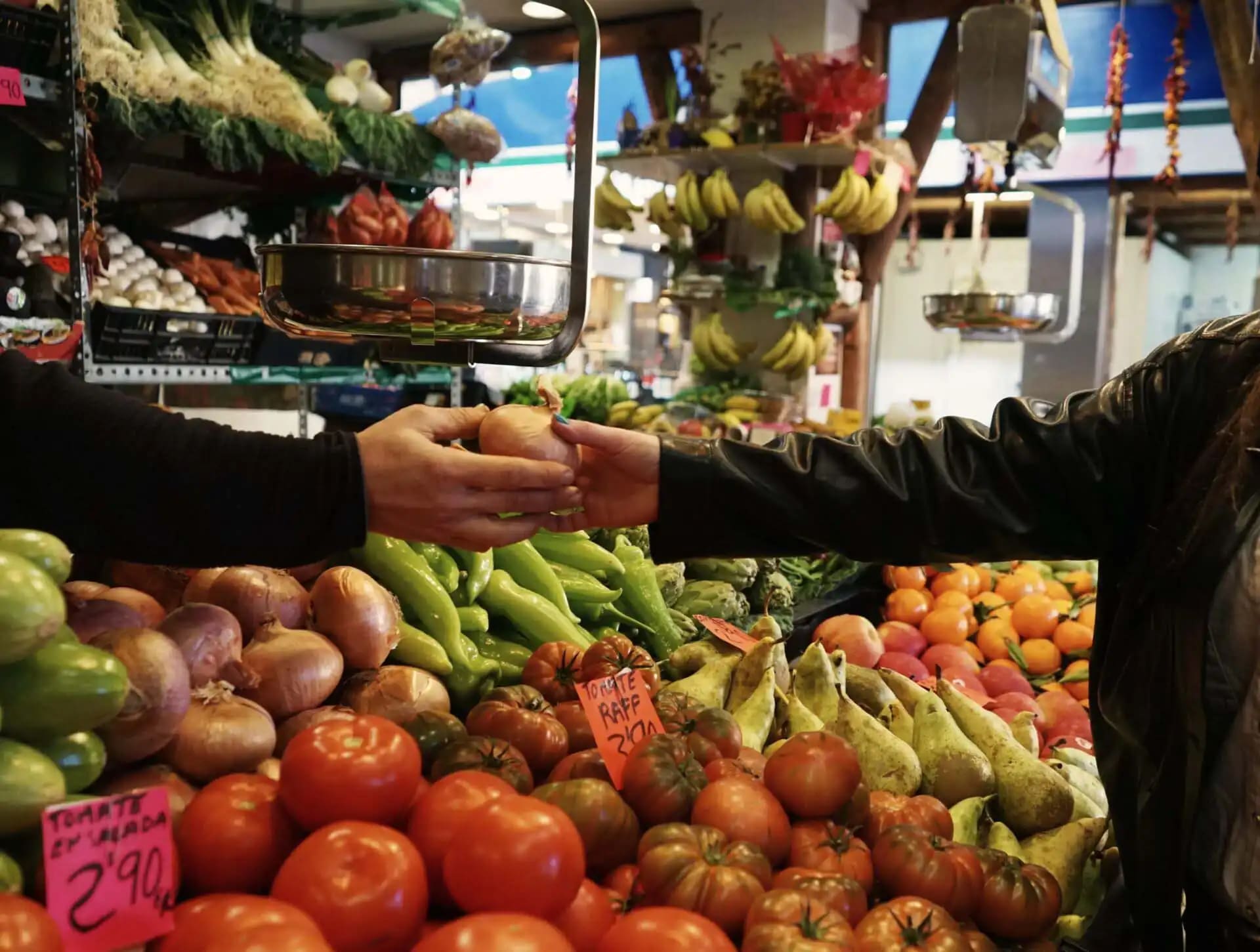
The experience begins at Mercado Olivar in central Palma, the city's historic covered market, open since 1951. You arrive around 10am to meet me and start the morning with a specialty coffee from one of the market's roasters. From there, we move through the stalls together. Not as tourists looking at produce, but as people who are actually about to cook with it.
I know the vendors personally. I introduce you to my fishmonger, the couple who sell Mallorcan black pig sobrassada, the cheese stall where I get the aged Mahón I use for pa amb oli. You hear where things come from, why they taste different here, and what makes a good one. You taste as you go. The market is the first lesson.
Inside Mercado Olivar: What You Will See and Taste
Mercado Olivar is organised into distinct sections, each worth exploring on its own terms. The fish hall is one of the finest in the Balearics: sea bass, red mullet, octopus, and local squid arrive fresh each morning from the fishing boats in the bay. The meat section has everything the Mallorcan kitchen runs on: sobrassada and botifarró sausages, lamb, rabbit, and free-range chicken.
The produce stalls shift with the season. In spring there are artichokes and broad beans. Summer brings tomatoes, aubergines, and figs. Autumn means wild mushrooms and the first almonds of the harvest. Winter is for root vegetables, citrus, and the slow-cooked dishes of the Mallorcan interior. Whatever month you visit, I build the menu around what is best that day.
Before you leave the market, you will have tasted the core flavours of the island: a sliver of aged cheese, a piece of sobrassada spread on warm bread, an olive from the Trencades variety that grows only here. The market is never just shopping. It is the first act of the meal.
The Drive to Sant Jordi
After the market, we travel together to Sant Jordi, a small village on the Palma plain, about 10 minutes south of the city. The drive takes you away from the tourist areas immediately: past almond groves, along stone walls, through a landscape that looks exactly as it has for generations.
Sant Jordi is where I was born and raised. My family has cooked in this village for generations, and the kitchen you will be cooking in is not a commercial event space. It is the home kitchen where I grew up. That distinction matters. The equipment is professional but the atmosphere is entirely domestic. There is no performance here.
What You Will Cook: Three Courses from the Island
The menu changes with the season and the group, but it always follows the same structure: a starter, a main course, and a dessert. Three authentic Mallorcan recipes, cooked from scratch, eaten together at the kitchen table.
Starter: Pa amb Oli and the Welcome Table
Every Soqueta experience begins the same way: a table laid with the best things Mallorca produces. Artisanal cheese. Local sobrassada. Trencades olives. Almonds from nearby trees. Homemade jam. A bottle of olive oil. Bread. This is the Mallorcan welcome: unhurried, generous, and entirely edible.
Pa amb oli, bread rubbed with ripe tomato and dressed with olive oil, is the centrepiece. You prepare it yourselves. I explain the technique, the tomato variety that works best, why the olive oil from the Tramuntana tastes different from what you get anywhere else. By the time the starter is finished, you have already started cooking.
Main Course: Tumbet, Arrós Brut, or Seasonal Mallorcan
The main course is where the real cooking happens. Depending on the season and your group's preferences, you will make one of Mallorca's most important dishes.
Tumbet is Mallorca's layered vegetable casserole. Aubergine, courgette, and potato, each fried separately, then layered in a clay pot with a slow-cooked tomato sauce. Simple ingredients, exact technique. It takes patience, and the result is worth it.
Arrós Brut, "dirty rice," is the island's iconic slow-cooked rice dish. Made with seasonal vegetables, herbs, and meat (traditionally rabbit or pork), it takes its colour from a rich broth that has been cooking for hours. Every family in Mallorca has their own version. This is mine.
Frit Mallorquí is a traditional fry of offal and vegetables, intensely flavoured and deeply local. Not for the timid. For those who want to understand where Mallorcan cooking actually comes from, this is the dish.
The main course is a hands-on cooking class, not a demonstration. You make it. I guide you through each step, explain the reasoning behind the technique, and adjust for your pace and experience. No cooking background is required.
Dessert: Gató de Almendra
The meal ends with gató de almendra, the classic Mallorcan almond cake. Naturally gluten-free, dense, fragrant with cinnamon and lemon zest, made with almonds from trees you can see from the kitchen window. Served with a spoonful of almond ice cream and a glass of sweet Moscatel wine.
This is my grandmother's recipe, unchanged. It is the taste that most guests say they remember longest after the experience is over.
The Tasting Lunch
After cooking, we sit down together to eat everything we have made. The table is set with local wine (a Mallorcan red or rosé, depending on the menu), still water, local soda, and at the end, three different local liquors: palo (a bitter Mallorcan digestif), hierbas (herb liquor), and gin de Menorca or similar. Coffee is locally roasted.
The lunch is unhurried. This is the part most guests describe as the unexpected highlight: sitting at a kitchen table in a Mallorcan home, eating food they cooked themselves, talking about where things come from. It tends to last longer than planned.
How Long Does It Take?
The full experience runs for approximately 5 to 6 hours. A typical schedule looks like this:
- 10:00 Meet at Mercado Olivar, Palma. Specialty coffee.
- 10:15–11:30 Market tour, shopping, tasting, vendor introductions.
- 11:45 Drive to Sant Jordi (10 minutes).
- 12:00–14:30 Hands-on cooking: starter, main, dessert.
- 14:30–16:00 Tasting lunch with wine, liquors, and coffee.
This is an approximate guide. I run experiences at the pace the group sets. Some groups spend longer at the market. Some linger longer over lunch. There is no rigid timetable.
Who Is This Experience For?
The Market Tour & Cooking Experience works for almost any group, but it suits some particularly well.
Couples and small groups who want a genuine local experience rather than a tourist activity. The private format means you are not sharing the kitchen with strangers.
Food-interested travellers who want to understand Mallorcan cuisine from the inside. Not just eat it in a restaurant, but learn how it works and where it comes from.
Families. The experience is entirely family-friendly. Children participate in age-appropriate tasks. Children under 3 join free.
Honeymoons and anniversaries. The private, unhurried format makes it a natural fit for couples celebrating something.
Groups up to 10. The experience works at any size within that range. Groups of 2 get the same attention as groups of 10.
Pricing and What Is Included
The experience is priced starting at €115 for the private group, for up to 6 people. The market portion adds €25 per person to cover the market tour element.
Everything included:
- Morning specialty coffee at the market
- Welcome table: cheese, sobrassada, olives, almonds, jam, olive oil, bread
- All ingredients for the three-course meal
- Local wine, water, and local soda during lunch
- Three local liquors (palo, hierbas, and a third seasonal option)
- Locally roasted coffee
- Printed recipe cards to take home
Transportation from the market to the kitchen can be arranged. I help coordinate taxis from Mercado Olivar (approximately 15 minutes, paid directly to the driver). Guests who are driving can follow me to the kitchen.
Is There a Cooking Class Without the Market Tour?
Yes. If you would prefer to start directly at the kitchen, the Traditional Cooking Experience is the right choice. Same kitchen, same chef, same three-course format, without the morning market visit. Also priced at €115 for a private group.
Both experiences are bookable through the same calendar. Most groups who are in Mallorca for at least three days choose the Market Tour version if they can. The market context changes how you understand everything that comes after.
Frequently Asked Questions
Do I need to know how to cook?
No. The experience is designed for everyone, including complete beginners. I guide you through every step. Cooking confidence is built in, not required upfront.
Can you accommodate dietary restrictions?
Yes. Let me know at the time of booking: vegetarian, vegan, gluten-free, and most common allergies are all accommodatable. The menu is built around your group, not the other way around.
What is the cancellation policy?
Free cancellation up to 30 days before your experience. Changes and rescheduling accepted with at least 10 days notice. Cancellations with less than 10 days notice are not permitted.
How do I get to Mercado Olivar?
Mercado Olivar is at Plaça de l'Olivar, in central Palma, easily reachable by taxi, bus, or on foot from most Palma hotels. I will send you exact meeting point details after booking.
Is parking available at the kitchen?
Yes. Parking is available on site at the Sant Jordi kitchen for guests who are driving.